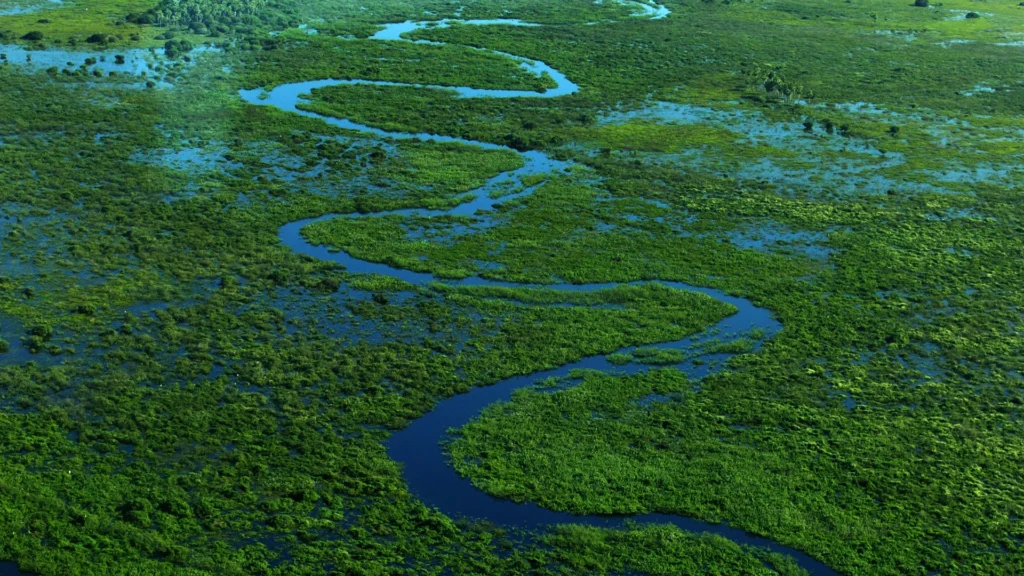
Peatlands and coastal wetlands are among the most efficient carbon storage systems on Earth, holding vast amounts of carbon while supporting rich biodiversity and providing critical ecosystem services. Restoration of these vital ecosystems not only mitigates climate change but also enhances water quality, controls flooding, and safeguards wildlife habitats.
At Mechwat, we provide end-to-end solutions for Peatland and Coastal Wetland Restoration projects. By integrating global standards, advanced methodologies, and carbon market frameworks, we ensure measurable environmental, social, and economic benefits while enabling access to carbon, water, and nutrient credits.
Comprehensive Services for Peatland and Coastal Wetland Restoration
Project Planning and Implementation
- Ecosystem Rehabilitation: Restore and manage degraded peatlands and wetlands to enhance carbon sequestration, reduce emissions, and improve biodiversity.
- Custom Project Designs: Tailor restoration strategies to specific ecosystems and regional needs, focusing on hydrological and ecological balance.
- Compliance with Global Standards: Align with frameworks like the Greenhouse Gas (GHG) Protocol, ISO 14064, and Article 6 of the Paris Agreement.
Life Cycle Assessment (LCA) and Techno-Economic Analysis (TEA)
- Sustainability Assessment: Use ISO 14040 and ISO 14044 standards to evaluate the environmental benefits and long-term impacts of restoration projects.
- Economic Feasibility Studies: Conduct TEA to assess the cost-benefit analysis and financial returns from carbon, water, and nutrient credits.
- Carbon Footprint Measurement: Apply ISO 14067 to quantify the carbon footprint of restoration activities.
Measurement, Reporting, and Verification (MRV)
- Accurate Carbon Flux Monitoring: Measure carbon storage and emissions reductions using advanced tools such as remote sensing, GIS, and in-situ measurements.
- Ecosystem Health Monitoring: Evaluate biodiversity improvements and hydrological balance to ensure project success.
- ISO Compliance: Follow standards like ISO 14064-3 and IPCC Guidelines for GHG quantification and ecosystem monitoring.
- Third-Party Verification: Collaborate with accredited validators to certify carbon, water, and nutrient credits.
Carbon, Water, and Nutrient Credits Eligibility
- Carbon Credits: Quantify and verify the carbon stored and emissions avoided through restoration projects, enabling credit issuance in markets like VERRA and Gold Standard.
- Water Credits: Address hydrological improvements and water quality enhancements to generate additional credit opportunities.
- Nutrient Credits: Mitigate nutrient runoff (e.g., nitrogen, phosphorus) to unlock credits for improved water quality.
- Market Access: Facilitate seamless integration into global carbon and nutrient markets, including Climate Action Reserve (CAR), ICR (Indian Carbon Registry), and EU ETS.
Relevant Standards and Frameworks for Restoration Projects
Carbon Accounting and Methodologies
- GHG Protocol: Framework for quantifying emissions reductions and carbon sequestration in peatland and wetland restoration.
- ISO Standards:
- ISO 14064-1 to ISO 14064-3: Guidance for GHG quantification and validation.
- ISO 14067: Carbon footprint of products related to restoration activities.
- ISO 14040/14044: Life Cycle Assessment for evaluating project impacts.
- IPCC Guidelines: Best practices for accounting carbon sequestration in wetlands and peatlands.
Reporting and Target-Setting Frameworks
- SBTi (Science-Based Targets Initiative): Align restoration projects with corporate net-zero targets.
- TCFD (Task Force on Climate-Related Financial Disclosures): Transparency in climate-related risks and opportunities.
- CSRD (Corporate Sustainability Reporting Directive): EU-specific sustainability compliance for wetland restoration projects.
- GRI (Global Reporting Initiative): ESG reporting for wetland and peatland projects.
- SASB (Sustainability Accounting Standards Board): Sector-specific ESG standards.
- CDP (Carbon Disclosure Project): Enhance transparency in climate-related disclosures for restoration initiatives.
- ISSB (International Sustainability Standards Board): Integrate restoration sustainability into financial reporting.
- IFRS (International Financial Reporting Standards): Standardize financial disclosures for peatland and wetland projects.
Carbon Market Standards
- VERRA’s Wetland Restoration and Conservation (WRC): Methodologies for peatland and wetland restoration projects to generate high-quality offsets.
- Gold Standard for Ecosystem Restoration: Ensures co-benefits for communities and biodiversity alongside carbon storage.
- Climate Action Reserve (CAR): Supports verified credits from wetland restoration projects.
- EU ETS (European Union Emissions Trading System): Market integration for large-scale wetland restoration efforts.
Sector-Specific Standards for Restoration Projects
- PACT (Partnership for Carbon Transparency): Promotes transparency in emissions reductions linked to ecosystem restoration.
- PCAF (Partnership for Carbon Accounting Financials): Financial sector guidance for investments in peatland and wetland restoration.
- GLEC (Global Logistics Emissions Council): Mitigates emissions from logistics related to restoration projects.
Integration with NDCs and SDGs
- Nationally Determined Contributions (NDCs): Align restoration projects with national climate action plans under the Paris Agreement.
- Sustainable Development Goals (SDGs): Contribute to:
- SDG 13: Climate Action.
- SDG 15: Life on Land.
- SDG 6: Clean Water and Sanitation.
- SDG 12: Responsible Consumption and Production.
Benefits of Peatland and Coastal Wetland Restoration Projects
Carbon Sequestration: Enhance natural carbon storage to combat climate change.
Hydrological Balance: Restore water flow and improve water quality.
Biodiversity Conservation: Support habitats for diverse species and enhance ecosystem health.
High-Quality Credits: Generate carbon, water, and nutrient credits for voluntary and compliance markets.
Economic Viability: Unlock revenue streams through credit trading and sustainable financing.
Align with Global Climate Goals: Contribute to corporate net-zero targets and national NDC commitments.
Why Choose Mechwat for Wetland Restoration?
At Mechwat, we bring expertise, innovation, and market access to deliver impactful peatland and coastal wetland restoration projects.
Our Commitment:
Customized Solutions: Develop tailored projects addressing regional ecosystem challenges.
Global Standards Compliance: Align with protocols like ISO, VERRA, SBTi, and IPCC Guidelines.
Market Leadership: Facilitate access to global carbon and nutrient credit markets for maximum returns.
Transparency and Innovation: Use advanced monitoring tools and methodologies for credible and scalable solutions.
Join us in restoring critical ecosystems, enhancing carbon storage, and creating a sustainable future through peatland and coastal wetland restoration. Together, we can make an impact.
Start Your Wetland Restoration Journey Today
Ready to implement transformative peatland and coastal wetland restoration solutions? Partner with Mechwat to design, execute, and monitor high-impact projects that deliver measurable results.