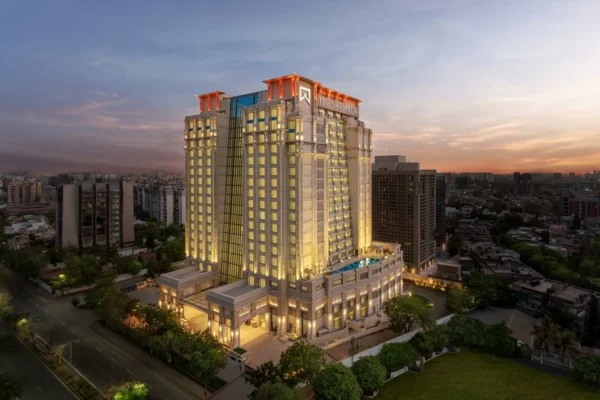
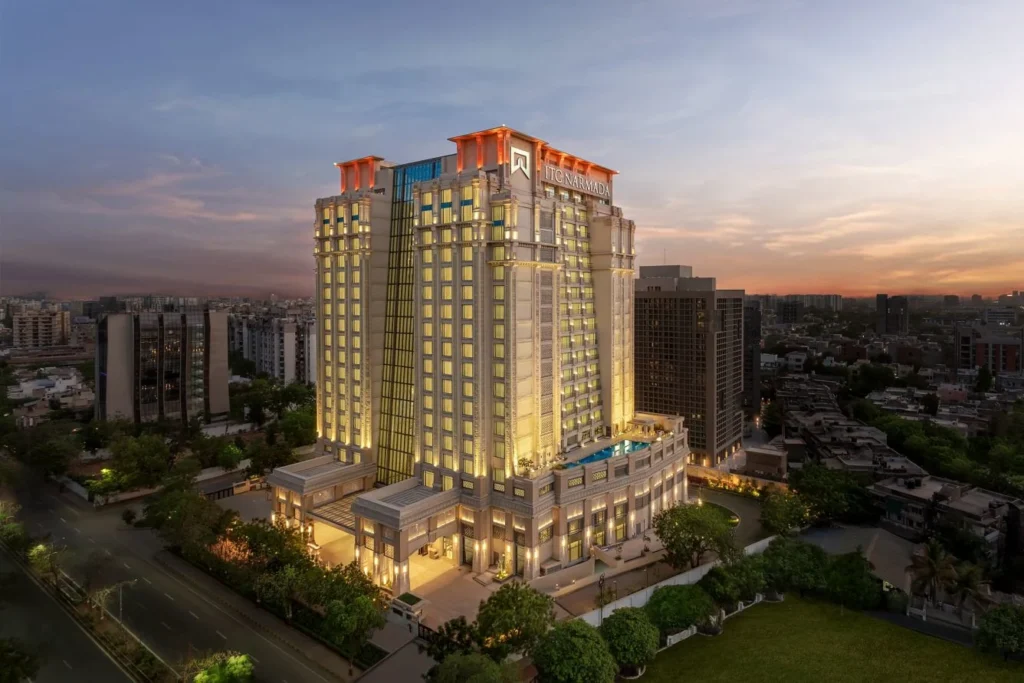
Mechwat Technologies successfully executed specialized water, sanitation, sewage-treatment and wastewater-recycling works for the prestigious ITC Narmada Hotel project in Ahmedabad, Gujarat.
The main hotel construction project was awarded to the Shapoorji Pallonji Group, under whom Mechwat was engaged to provide water and sanitation solutions for both the main project infrastructure and the temporary facilities required during the hotel’s construction.
Mechwat’s responsibilities covered two critical project stages:
- Water, sanitation and wastewater-management facilities supporting the permanent hotel development.
- Temporary water and sanitation infrastructure for the labour colony, workforce accommodation and construction camp established during the project execution period.
The project commenced in 2016 and Mechwat’s assigned scope was completed in 2021.
This multi-year assignment demonstrates Mechwat’s capability to support major EPC contractors and construction companies with integrated solutions covering the full project lifecycle—from temporary construction-site sanitation to permanent wastewater-treatment and water-recycling infrastructure.
Project Background
Large hospitality developments require extensive civil, architectural, mechanical, electrical, plumbing and environmental infrastructure. In addition to the final hotel facilities, the construction phase may involve hundreds of workers, engineers, supervisors, contractors and support personnel operating from temporary camps and labour colonies.
Such project sites require dependable systems for:
- Drinking and utility-water management
- Safe toilets and sanitation facilities
- Sewage collection and treatment
- Wastewater recycling
- Hygiene management
- Prevention of groundwater and soil contamination
- Responsible management of wastewater from temporary settlements
- Compliance with project health, safety and environmental requirements
Mechwat was engaged under the Shapoorji Pallonji Group to address these water and sanitation requirements through project-specific technical solutions.

Mechwat’s Scope of Work
1. Labour Colony and Construction-Camp Sanitation
During the construction of ITC Narmada Hotel, Mechwat provided water and sanitation solutions for the labour colony and temporary construction camp.
The facilities were developed to support the day-to-day sanitation requirements of workers, contractors, site personnel and support teams throughout the construction period.
The construction-phase scope included solutions related to:
- Temporary and semi-permanent toilet facilities
- Bio-toilet systems
- Sanitation infrastructure for labour accommodation
- Sewage collection and treatment
- Wastewater-management arrangements
- Water-treatment support
- Treated-water recycling and reuse
- Hygiene-oriented sanitation planning
- Site-specific installation and technical coordination
- Support for changing workforce and occupancy requirements
These facilities helped maintain hygienic living and working conditions during the construction phase while reducing the risk of untreated sewage discharge around the project site.
2. Bio-Toilet Systems
Mechwat provided bio-toilet and biological sanitation solutions suitable for temporary project facilities and construction-site applications.
Bio-toilet systems can help manage human waste through biological treatment while reducing dependence on conventional sewer connections, particularly where permanent underground drainage infrastructure is unavailable or still under construction.
The solution supported:
- Improved sanitation for labour camps
- Safe management of human waste
- Reduced direct discharge of untreated sewage
- Lower environmental contamination risk
- Flexible deployment during different construction stages
- Improved hygiene and dignity for the project workforce
3. Sewage-Treatment Facilities
Mechwat supported the development and execution of sewage-treatment infrastructure for wastewater generated from the hotel project and its associated temporary facilities.
The treatment system was designed around project-specific requirements and intended to assist with:
- Collection and treatment of domestic sewage
- Reduction of organic pollutants
- Reduction of suspended solids
- Odour management
- Improvement of treated-water quality
- Responsible discharge or reuse
- Stable operation under variable wastewater loads
Construction camps and hotels can both experience significant variations in sewage generation. The treatment approach therefore required flexibility to accommodate changing occupancy, workforce strength and operational patterns.
4. Wastewater Recycling and Reuse
Mechwat incorporated wastewater-recycling provisions to improve the overall water efficiency of the project.
Subject to the approved treatment quality and project requirements, treated wastewater could be considered for suitable non-potable applications such as:
- Landscape irrigation
- Toilet flushing
- Construction activities
- Floor and utility-area washing
- Dust suppression
- Site cleaning
- Greenbelt development
- Other approved service-water requirements
Recycling treated wastewater helps reduce freshwater consumption while supporting more sustainable construction and long-term hotel operations.
5. Associated Water-Treatment Facilities
Mechwat also provided solutions related to water-treatment requirements arising during the project.
Construction camps and labour colonies need reliable water for drinking, cooking, bathing, washing and other daily requirements. The treatment configuration was planned according to available source-water quality and intended application.
The associated scope included project-specific support for:
- Water-treatment planning
- Equipment and system configuration
- Utility-water management
- Water-quality improvement
- Storage and distribution integration
- Coordination with plumbing and civil infrastructure
6. Permanent Hotel Water and Sanitation Infrastructure
In addition to temporary labour-camp facilities, Mechwat supported water and sanitation requirements associated with the permanent hotel development.
Luxury hospitality properties generate wastewater from multiple sources, including:
- Guest rooms
- Restaurants
- Commercial kitchens
- Banquet and event facilities
- Laundry operations
- Staff areas
- Housekeeping activities
- Toilets and washrooms
- Landscaping and utility operations
Mechwat’s integrated approach helped support the safe treatment and responsible reuse of wastewater generated across the project.
Key Project Requirements
The ITC Narmada Hotel project required a coordinated solution capable of serving both temporary construction-stage needs and permanent hospitality infrastructure.
Key project requirements included:
- Safe sanitation for the construction workforce
- Reliable toilet facilities for labour colonies
- Treatment of sewage generated at temporary camps
- Prevention of uncontrolled wastewater discharge
- Water-treatment support for camp and site requirements
- Integration with the construction programme
- Flexibility to accommodate changing workforce numbers
- Coordination with civil, plumbing and MEP contractors
- Wastewater treatment for the permanent hotel facility
- Recycling of treated water for suitable applications
- Long-term operational reliability
- Alignment with health, safety and environmental expectations
Project Execution Approach
Requirement Assessment
Mechwat assessed the water demand, sanitation needs, sewage-generation patterns, workforce requirements and construction-stage conditions before planning the systems.
Temporary Infrastructure Planning
Sanitation and wastewater facilities were configured for the labour colony and construction camp, considering changing site layouts, workforce strength and temporary utility arrangements.
Technical Design and System Selection
The appropriate sanitation, treatment and recycling systems were selected based on site conditions, wastewater characteristics and project requirements.
Coordination with Shapoorji Pallonji Group
Mechwat worked under the Shapoorji Pallonji Group and coordinated its activities with the wider construction programme, project management team, civil contractors, plumbing teams and MEP agencies.
Supply and Installation
Equipment, treatment systems and sanitation facilities were supplied and installed according to the approved project requirements and site schedule.
Testing and Commissioning Support
The installed systems were inspected, tested and supported through the commissioning and project-completion process.
Multi-Year Project Support
As the project extended from 2016 to 2021, Mechwat provided continued technical coordination and execution support across different stages of development.
Project Challenges
Managing Construction-Stage Sanitation
The sanitation system had to serve a temporary yet operationally intensive environment with a changing workforce and evolving construction-site layout.
Variable Sewage Generation
Wastewater volume could fluctuate based on labour strength, construction activity, occupancy and project scheduling.
Temporary Utility Constraints
Permanent sewer, plumbing and drainage infrastructure may not be fully available during early construction stages. Mechwat therefore had to provide practical solutions suited to temporary site conditions.
Hygiene and Workforce Welfare
Maintaining clean and functional toilets, sewage-management systems and water facilities was essential for workforce health, dignity and productivity.
Coordination with Multiple Agencies
The work required close coordination with Shapoorji Pallonji Group, civil teams, MEP contractors, plumbing contractors, consultants and site-management personnel.
Transition from Temporary to Permanent Systems
The project involved both construction-phase facilities and permanent hotel infrastructure, requiring different technical and operational approaches within one development.
Long-Duration Execution
The five-year execution period required continuity in technical planning, documentation, site coordination and project support.
Value Delivered by Mechwat
Mechwat helped create a safer, cleaner and more environmentally responsible project environment by delivering integrated water and sanitation infrastructure.
Key value delivered included:
- Improved sanitation for the construction workforce
- Hygienic toilet facilities for labour colonies and temporary camps
- Reduced risk of untreated sewage discharge
- Improved wastewater collection and treatment
- Reduced contamination risk to soil and groundwater
- Water-treatment support for construction-site requirements
- Potential reuse of treated wastewater
- Reduced freshwater demand for eligible non-potable applications
- Technical integration with the overall construction programme
- Support for permanent hotel water and sanitation infrastructure
- A coordinated solution covering both temporary and permanent requirements
- Specialist project execution under a leading EPC and construction group